Established Grocery & Wholesale Distribution Business — 70%+ Recurring Wholesale Revenue Active
973 views · 35 this week
- Real estate
- Leased
- Monthly rent
- $7,500
- Employees
- 4
- Established
- 2012
- Inventory value
- $95,000
- FF&E value
- $50,000
- Building size
- 10,000 sq ft
- Reason for sale
- Relocation
- Listing #
- EN-0011
This is an established retail grocery and multi-channel wholesale distribution business serving the Atlanta/DeKalb County market, with over 70% of revenue coming from stable, relationship-driven wholesale accounts rather than walk-in retail traffic. The business operates across four revenue channels: a large anchor wholesale client, a base of local wholesale accounts, retail (credit card) sales, and an emerging new-wholesale-client channel with clear room to grow.
2025 full-year revenue was $1,525,932, with the business showing a sharp and sustained improvement in gross margin — from 21.3% in 2025 to 29.7% based on the first five months of 2026 — reflecting improving unit economics rather than a one-time event. Total operating expenses remain lean at under $104,000 against $636,000 in five-month 2026 revenue.
The sale includes $120,000 in tangible hard assets — commercial refrigeration equipment and fixtures ($50,000) plus grocery inventory settled at cost at closing ($70,000) — alongside the transferable business relationships and operations. The business is structured as an S-Corp, allowing either an asset sale or stock sale depending on buyer preference, and the seller has indicated openness to carrying a portion of seller financing for a qualified buyer.
Full financials, lease terms, and customer detail are available to qualified buyers upon execution of a mutual NDA.
Facilities
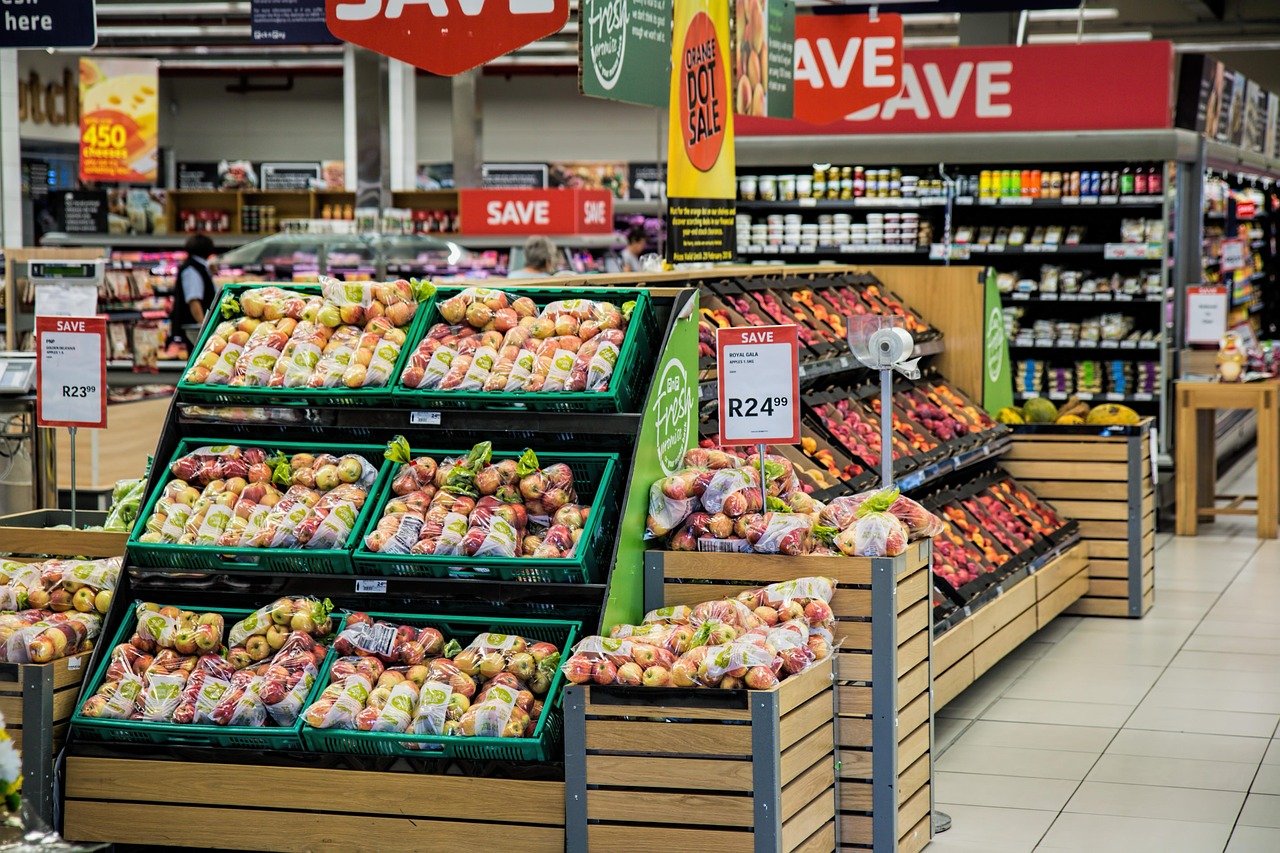
The business operates in a 10,000 sq/ft retail facility with excellent foot traffic located in the heart of Stone Mountain.
Competition
Direct/nearby competition:
Family Dollar and Dollar Tree — both located in the same retail plaza (4812 Redan Rd), carrying some grocery/convenience items but not full grocery assortments
Redan Food Mart — a dedicated grocery/food mart roughly half a mile away at 5616 Redan Rd, the closest true grocery-format competitor
Food Depot — a discount grocery chain with a Stone Mountain location (30083)
Kroger — full-service chain grocery with a Stone Mountain-area location (Crowes Crossing)
Growth & expansion opportunity
The "new wholesale clients" channel is currently the smallest revenue contributor ($9,000 in 2025) relative to the large wholesale client ($552,000) and local wholesale base ($522,000) — suggesting meaningful room to grow by replicating existing wholesale relationships into new accounts. The margin trajectory (21.3% → 29.7%) also suggests operational improvements a new owner could continue building on.
Support & training offered
Seller is willing to train new owner for 30 days post closing.
Local market insights
AI-generated general context — not specific to this business. Always verify independently.
Dekalb County snapshot
DeKalb County, located just east of Atlanta, is a large, densely populated county with a population that has been relatively stable to modestly growing in recent years, supported by its proximity to the Atlanta metro job market. It has a socioeconomically diverse population with a wide range of income levels—generally middle-income overall, with more affluent pockets near Emory University and Decatur, and lower-income areas in the southern parts of the county. Economically, the county benefits from a mix of established residential communities, healthcare and education anchors (like Emory and the CDC), and ongoing commercial development, giving it a mature but still evolving business environment. For a small business buyer, this suggests a market with steady, diverse consumer demand rather than explosive growth, where success often depends heavily on the specific neighborhood or submarket within the county.
Grocery & Convenience — typical benchmarks
As a general industry rule of thumb, small independently owned grocery and convenience stores typically operate on fairly thin net profit margins, often in the low single digits to perhaps around 5-10% depending on product mix (with fuel sales, if applicable, usually carrying much thinner margins than in-store merchandise like snacks, beverages, and grocery items). Valuations for these types of businesses are commonly discussed in terms of a multiple of Seller's Discretionary Earnings (SDE), with rough rules of thumb often falling somewhere in the range of 1.5x to 3x SDE, though this can vary widely based on lease terms, location, competition, and add-on revenue streams like lottery, ATM, or money order commissions. These figures are only broad, generic industry benchmarks meant to provide context, not precise or authoritative statistics, and any real valuation would depend heavily on the specific financials, location, and condition of an individual business. Prospective buyers or sellers should treat these as starting points for discussion rather than definitive figures, and should consult a qualified business appraiser or financial professional for an accurate assessment.